Soan Papdi vs Patisa: Same Sweet, or Not Quite?
Soan papdi and patisa are often called the same sweet, yet most counters sell both. How they differ in texture, colour and shape, and why one is a Diwali joke.
By Laxman Bikaner · · 3 min read
Every Diwali, somewhere in India, a box of soan papdi gets gifted, re-gifted, and quietly gifted again. It has become the national joke of the festival. Which is a little unfair, because a fresh piece of soan papdi is a genuinely lovely thing.
And then there's patisa, sitting right next to it on our counter on 100 Ft Road, Ballabgarh. Same thing? Cousins? Here's the honest answer.
Technically, the same sweet
Look it up and you'll find patisa listed as just another name for soan papdi, along with sohan papdi, san papri and shonpapdi. In some parts of India, like Maharashtra, people simply call soan papdi patisa.
Both are built from the same short list: besan, a little maida, ghee, sugar, and elaichi for fragrance.
But at the counter, they're not the same
Walk into most North Indian mithai shops and you'll see both, priced differently, looking different. That's because over the years they've drifted apart in how they're made and what you get:
| Soan Papdi | Patisa | |
|---|---|---|
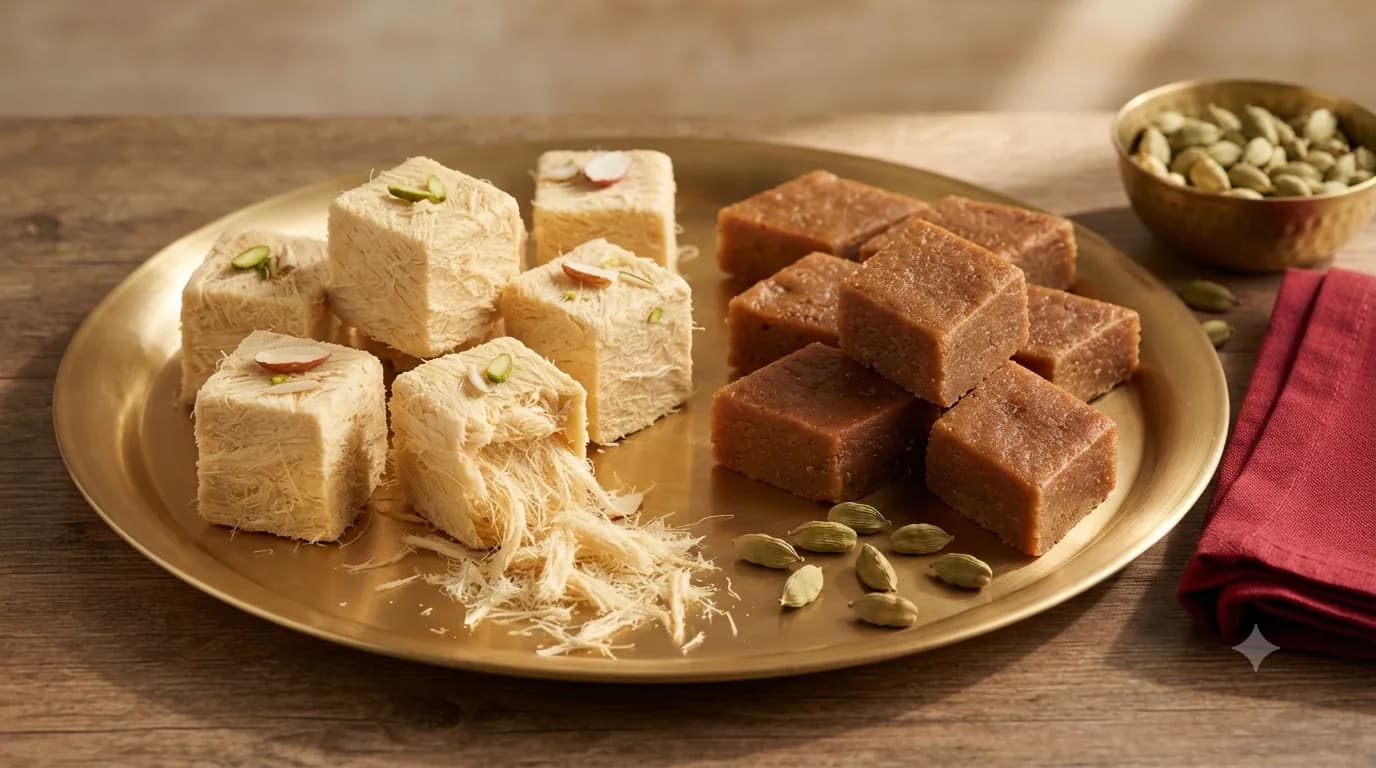
| Texture | Light, flaky, falls into threads | Denser, firmer, more of a bite |
| Colour | Pale gold | Darker, more roasted |
| Shape | Cubes, or loose flakes | Usually diamonds or bars |
| Eating it | Melts almost instantly | You chew it a little, the ghee comes through |
Think of soan papdi as the airy one and patisa as the rich one. Same family, different personality. Ek hawa jaisi, ek thodi bhaari.
How to tell a good one
- Soan papdi should flake, not crumble. Press a corner: fine threads should come apart. If it breaks into sandy powder, it's old or it was made in a hurry.
- It should melt on the tongue. A good piece is gone in a few seconds and leaves elaichi behind, not a sugary grit.
- Patisa should be firm but not hard. A slight resistance, then it gives. Rock-hard patisa has been sitting out.
- Both should smell of roasted besan and ghee. Not oil, not "nothing".
In defence of soan papdi
Our guess at why the Diwali joke exists: packed soan papdi travels well and lasts, so it ends up in a lot of last-minute corporate boxes. The box isn't the problem. A stale, factory-pressed slab is.
A fresh piece from a counter, flaky and fragrant, is a different sweet. Give it another chance this Diwali. Bas, re-gift mat karna.
And if you want something a little richer in the same style, try a Roll Patisa or a Kaju Patisa, or go the other way to a single Soan Tikki, which is sold by the piece.
Keeping them crisp at home
Both are dry sweets, so they don't need the fridge. What they hate is moisture. Soan papdi especially: those fine flakes pull in humidity from the air, and a box left open for an afternoon in the monsoon goes from flaky to chewy.
So close the box properly after every piece, keep it away from the stove and the steam, and if you've bought loose pieces, move them into an airtight dabba. Patisa is more forgiving because it's denser, but the same rule helps it too.
परत-परत में मिठासBoth live in the petha and patisa section of our sweet shop menu. Building a Diwali box? Here's why kaju katli is in every one.