Samosa-Jalebi: North India's Favourite Combo, in Ballabgarh
Samosa-jalebi, the teekha-meetha combo of North Indian mornings. Where both came from, why they work together, and how to order the pair at our Ballabgarh shop.
By Laxman Bikaner · · 2 min read
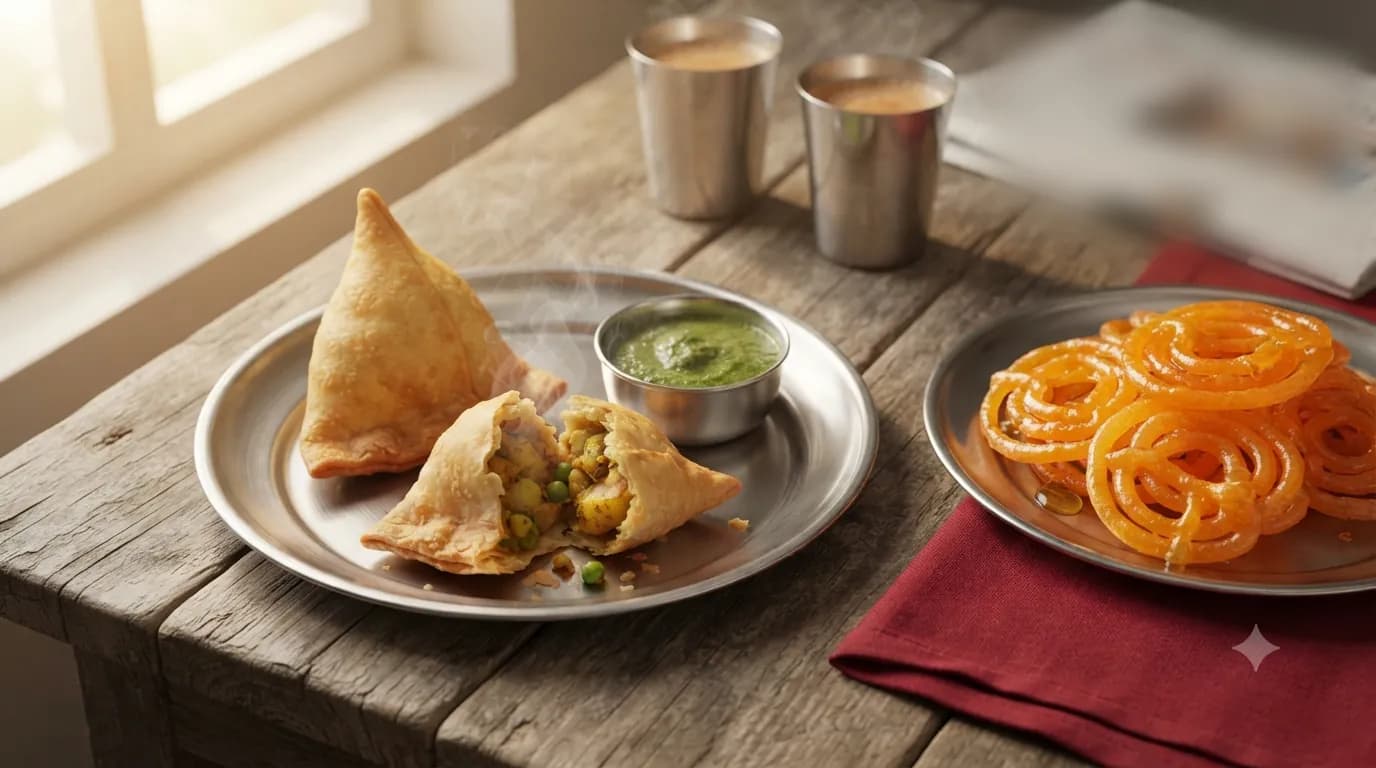
Sunday morning, a newspaper on the table, chai in steel glasses, and someone sent to the halwai for samosa-jalebi. If you grew up in North India, you know the exact smell of that paper packet.
It makes no sense on paper. One is a spicy, fried potato pastry, the other is a fried spiral soaked in sugar syrup. Together, they're a breakfast a lot of North India swears by. Here's the story, and how to get the pair at our shop on 100 Ft Road, Ballabgarh.
Two travellers that settled in India
Neither of them started here, which surprises most people.
The samosa comes from Central Asia and the Middle East. Its name goes back to a Persian word for a triangular pastry, and it arrived in the 13th or 14th century with cooks working in the royal kitchens of the Delhi Sultanate. India then did what India does: stuffed it with spiced potato, peas and green chillies and made it its own.
The jalebi is older still. The earliest known recipe for something like it is in a 10th-century Arabic cookbook, under the name zulabiya. It spread across West Asia, Africa and South Asia, and here it became the crisp, syrupy spiral we know: batter piped into hot oil, then dropped into syrup.
Why teekha and meetha work together
It's the same reason chaat has both imli and green chutney. Your tongue gets bored of one thing. A bite of hot, spicy samosa makes the jalebi taste sweeter, and the jalebi resets your mouth for the next bite of samosa. Teekha, meetha, teekha, meetha, until the plate is empty.
There's also the crunch: a flaky samosa crust and a crisp jalebi, both at their crispest in the first few minutes. That's the one rule of this combo. Eat it hot.
How to have it like a pro
- Samosa first, jalebi after. Or alternate. Just don't start with jalebi, it makes the samosa taste flat.
- Ask for chutney. A samosa with green chutney is a different, better samosa.
- Jalebi by the paav. Jalebi is sold by weight, and a paav (250 g) is a good start for two or three people. Add more if the plate empties fast. It will.
- Want it as a meal? Get a Chhole Samosa instead, samosa with chhole.
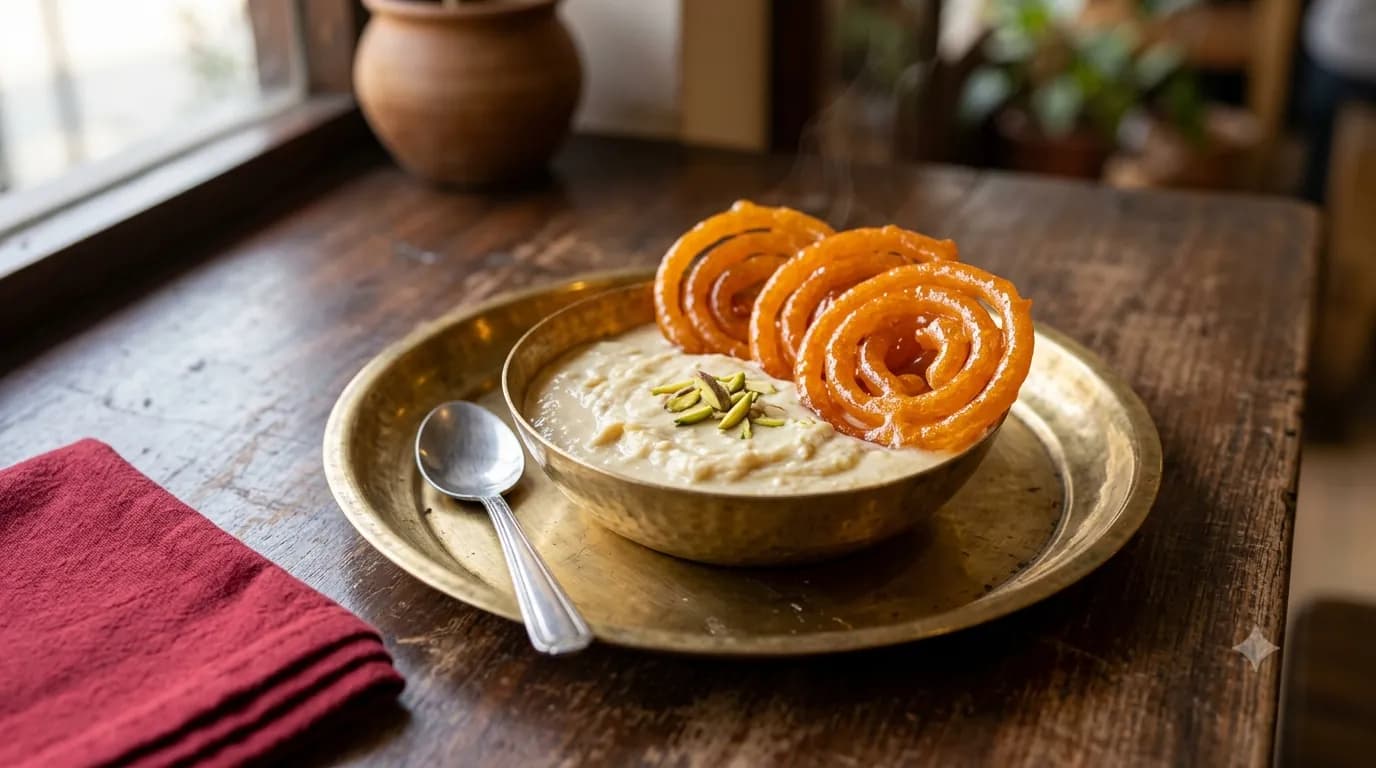
- Feeling fancy? Hot jalebi with cold rabri on top. In a lot of North Indian homes, that's dessert sorted.
Taking it home
If you're carrying it home, ask for the samosas and jalebi in separate packets, and eat them within the hour. Samosa goes soft once it steams in a closed box, and jalebi slowly loses its crunch as the syrup soaks in. Thoda door ho, toh tawa pe do minute garam kar lo.
एक तीखा, एक मीठा, और संडे पूराThere's a lot more on the savoury side, from kachori to chhole bhature, on our sweet shop menu. And for the plates that come with dahi and chutney, here's our chaat guide.