Dosa, Idli and Uttapam at a Mithai Shop in Ballabgarh
Masala dosa, idli, vada and uttapam at our Ballabgarh sweet shop. What each one is, how dosa differs from uttapam, and how to order like a regular.
By Laxman Bikaner · · 3 min read
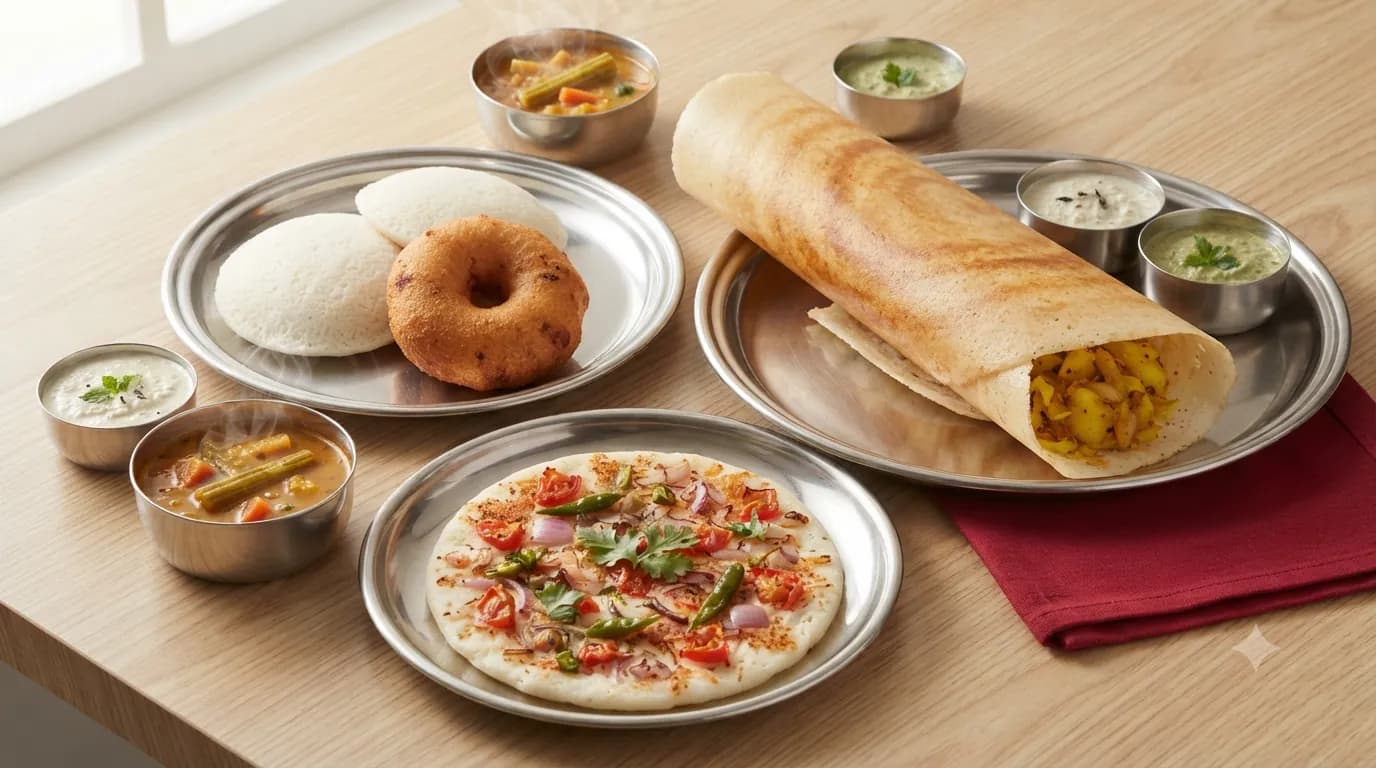
A mithai shop selling dosa? It surprises first-timers. But walk into many big sweet shops in North India and there it is, next to the kachori and the chaat, because sometimes the family wants something light, crisp and not sweet at all.
At our shop on 100 Ft Road, Ballabgarh, the South Indian plates sit on the same menu as the mithai and namkeen. Here's what each one is, and how to pick.
It all starts with one batter
Dosa, idli and uttapam share a base: rice and urad dal, soaked, ground together and left to ferment. That fermentation is what gives them their slightly sour taste and makes them light to eat. The batter is the same; what you do with it changes everything.
These are old dishes, too. A dosa recipe is written down in the 12th-century Sanskrit encyclopedia *Manasollasa*, and references to it go back even further in Tamil literature.
Dosa: thin and crisp
The batter is spread thin on a hot tawa until it turns golden and crisp, then rolled or folded.
- Paper Plain Dosa is as thin and crisp as it gets, all crunch.
- Masala Dosa is the famous one: a crisp dosa wrapped around spiced potato. Udupi in Karnataka is often credited as its home.
- Paneer Dosa and Cheese Dosa swap or add the filling, a North Indian twist kids especially love.
Idli and vada: soft and crunchy
Idli is the same batter, steamed in little moulds instead of fried. Soft, spongy, very mild, and that's the point: it's meant to soak up sambar. It's one of the lightest things you can eat on a sweet-shop menu.
Vada (medu vada) is the opposite: a fried urad dal doughnut, crisp outside and soft inside. Idli and vada are classic partners, and both come with sambar on our menu.
Uttapam: thick, with toppings
Uttapam uses the same batter, but poured thick, with toppings like tomato, onion, chilli and capsicum cooked right into the surface. Think of it as the soft, pizza-like cousin of the dosa. Ours also comes as Paneer Uttapam and Cheese Uttapam.
South Indian at our shop
- Idli Sambar₹50/ plate
- Vada Sambar₹50/ plate
- Paper Plain Dosa₹80/ plate
- Masala Dosa₹100/ plate
- Paneer Dosa₹120/ plate
- Cheese Dosa₹140/ plate
- Uttapam₹100/ plate
- Paneer Uttapam₹120/ plate
- Cheese Uttapam₹140/ plate
Dosa vs uttapam vs idli
| Dosa | Uttapam | Idli | |
|---|---|---|---|
| How it's cooked | Spread thin on a tawa | Poured thick on a tawa | Steamed |
| Texture | Crisp | Soft and thick | Soft and spongy |
| Toppings | Filling inside (masala dosa) | Cooked into the top | None |
| Feels | Light, crunchy | Filling | Lightest of all |
How to order like a regular
- First time? Masala dosa. It's the one everyone knows for a reason.
- Want something light? Idli sambar. Add a vada if you want some crunch.
- Hungry? An uttapam fills you up more than a dosa.
- Eat dosa straight away. A dosa is at its crispest in the first few minutes; it softens as it sits.
- Finish with something sweet. You're in a mithai shop, after all. A gulab jamun or kala jamun is right there.
उत्तर की मिठाई, दक्षिण का डोसाEverything South Indian is on our sweet shop menu, next to the chaat and the samosa.