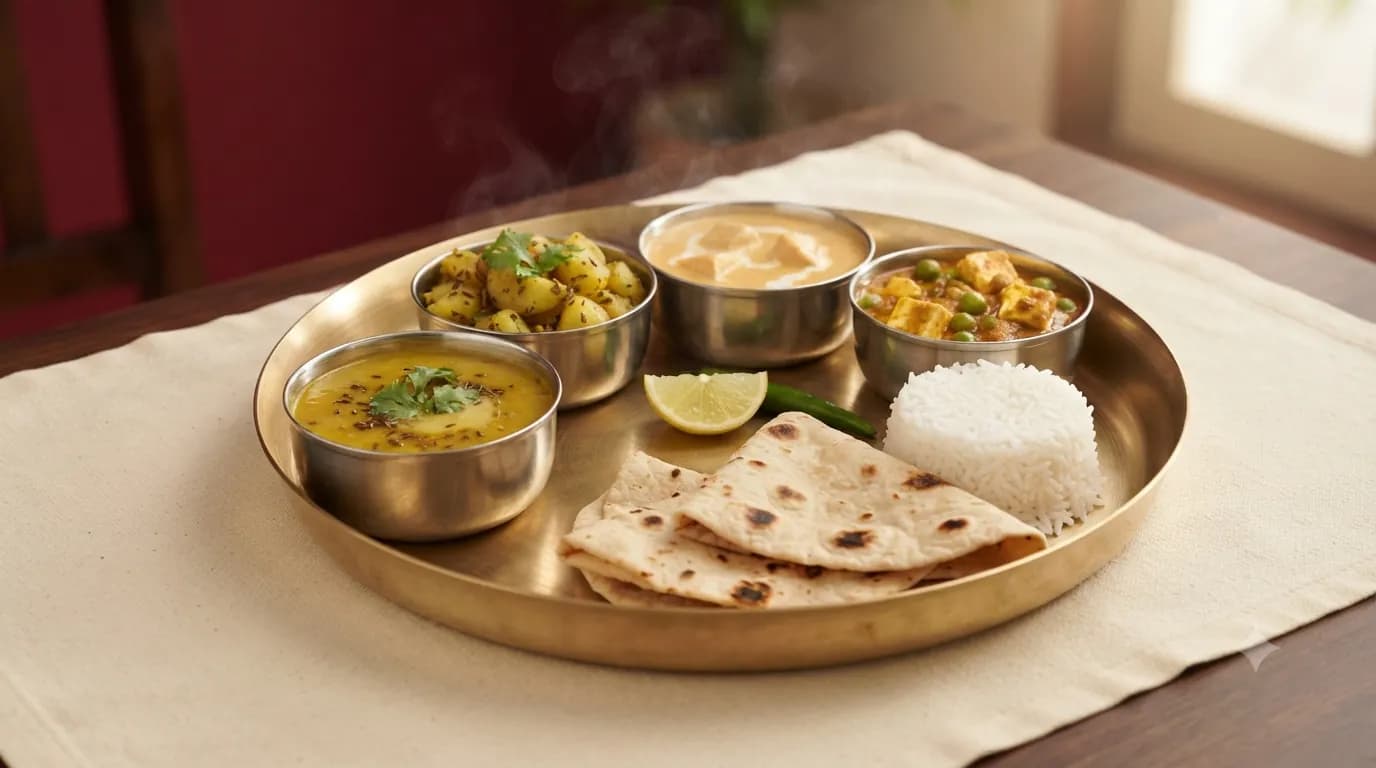
Reading a Mithai Price List: Per Kg, Per Piece and Per Plate
Why mithai is priced per kg, when it's per piece or per plate, how to work out a 250 g box, and the one thing to watch on the scale. A plain guide to the board.
By Laxman Bikaner · · 3 min read
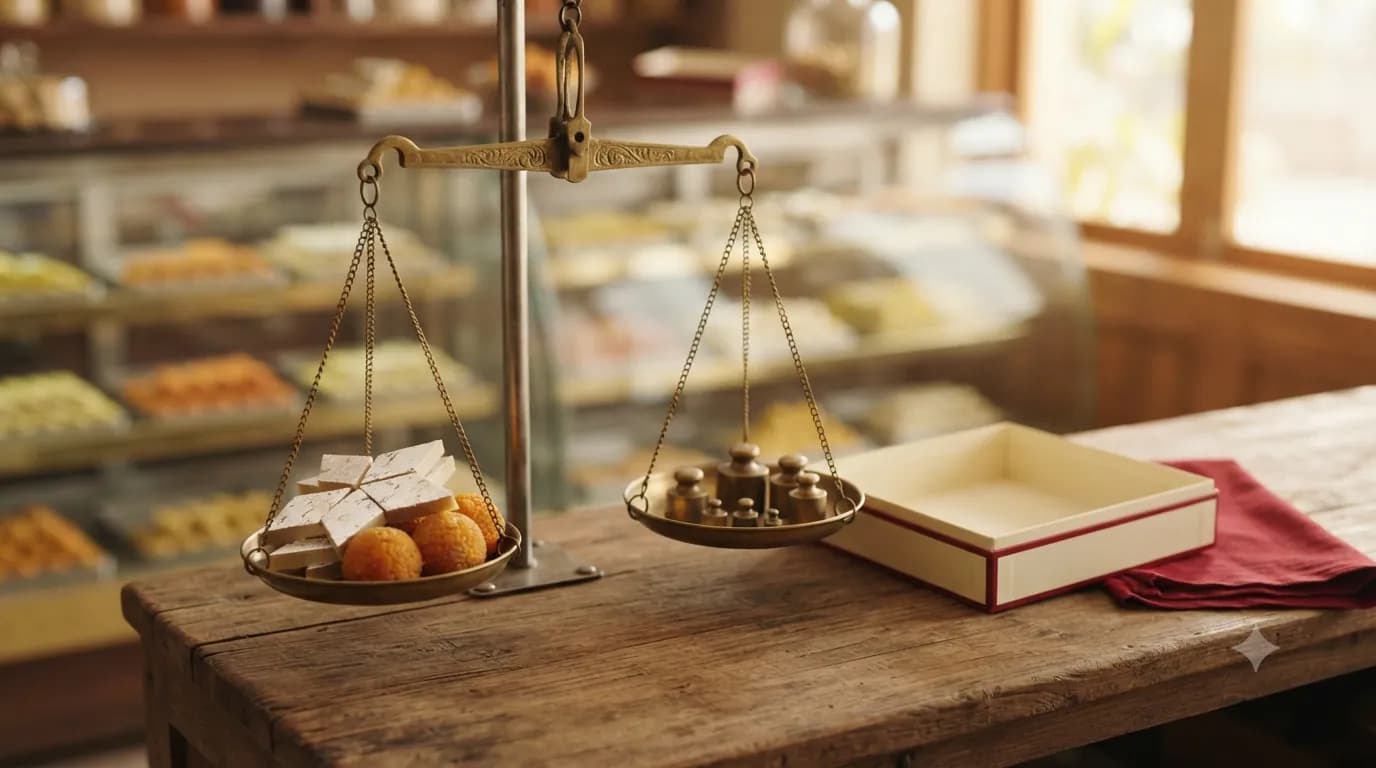
Walk into any mithai shop and the board says ₹-something per kg, next to a sweet you want maybe six pieces of. So how much is that, actually? And why is the rasgulla priced differently from the barfi right next to it?
Here's how to read a mithai price list, ours on 100 Ft Road, Ballabgarh or anyone else's, without doing maths in your head while the queue waits behind you.
Why mithai is sold per kg
Because it always has been. Mithai was weighed on a taraazu long before anyone printed a price list, and most sweets are still sold the same way: you pick, they weigh, you pay for the weight.
It's also the fairest way for sweets that come in different sizes. Two pieces of barfi are never exactly the same, but a kilo is a kilo.
On our menu, every price is written the same way: the amount, then what it's for. So "/ kg" means per kilo, "/ pc" per piece, "/ plate" per plate. No guessing.
Sold per kg
- Kaju Katli₹1,000/ kg
- Motichoor Ladoo₹480/ kg
- Garam Jalebi₹240/ kg
Working out a smaller box
Nobody buys exactly a kilo of everything. The quick maths:
| You ask for | You pay |
|---|---|
| 1 kg | The full per-kg price |
| 500 g (aadha kilo) | Half of it |
| 250 g (paav) | A quarter of it |
| 100 g | A tenth of it |
A mixed box works the same way, sweet by sweet. Two hundred grams of kaju katli and three hundred grams of ladoo is a fifth of one price plus three-tenths of the other. Easier still: at most counters you can just give a budget and let them fill the box to it. Budget batao, dabba bharo.
Why some sweets are per piece
Big, individual sweets are easier to sell by the piece: one is one, whatever it weighs. Think of a spongy rasgulla, a Raj Bhog, or a Mawa Kachori. You'd never ask for "200 grams of raj bhog", you'd ask for four.
Sold per piece
- Sponge Rasgulla₹25/ pc
- Raj Bhog₹30/ pc
- Mawa Kachori₹35/ pc
- Soan Tikki₹20/ pc
And per plate
Chaat and restaurant food are priced per plate, because you eat them there and then. In the Rasoi, many dishes come as half or full: same dish, two sizes, two prices. Our chaat guide has the whole counter explained.
Per kg isn't the whole story
A higher per-kg price doesn't always mean a more expensive box. Kaju katli is cut thin, so a kilo is a lot of pieces. A syrupy sweet is heavy, so a kilo is fewer pieces. If you're buying "one piece for each guest", ask how many pieces come in a kilo before you compare prices on the board.
The one thing to watch: the box
You're paying for the mithai, not the dabba. A cardboard box can weigh a fair bit on its own, and weighing it along with the sweets means you get less mithai than you paid for. Weights-and-measures officials treat that as short-weighing, and shops have been fined for it.
So it's completely fair to ask any counter, ours included, to put the empty box on the scale and zero it first. A good shop won't mind. Imaandari ki baat hai.
तौल पूरा, भरोसा पूराEvery price we charge is on the sweet shop menu and the Rasoi menu, written the same plain way.