Barfi Guide: Kaju, Pista, Doda, Nariyal and More
Barfi gets its name from the Persian word for snow. The types of barfi, from pista to doda to moong dal, what each tastes like, and which to gift.
By Laxman Bikaner · · 3 min read

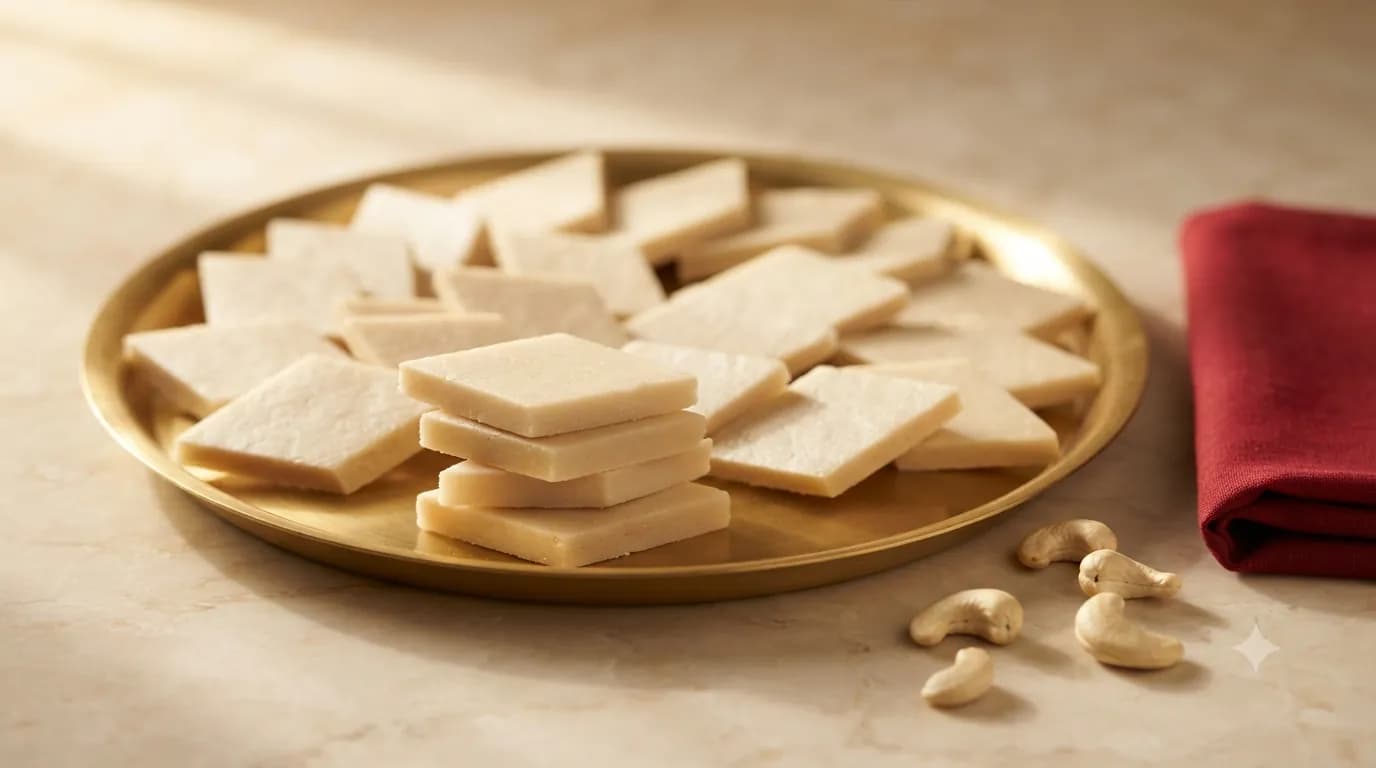
Here's a nice bit of trivia for your next family function: barfi comes from the Persian word for snow. The first barfis were probably pale and white, like little squares of snow, and the sweet is believed to have come to India with the Mughals in the 16th century.
Today, "barfi" covers a whole tray of squares in every colour, and at our counter on 100 Ft Road, Ballabgarh there are around ten. They're not all made the same way, so here's how to tell them apart.
The classic: khoya and sugar
At its simplest, barfi is khoya (milk cooked down to its solids) and sugar, cooked together until thick, spread on a tray, cooled and cut into squares. Then come the flavours: pista, kesar, elaichi, rose. Traditionally the top is often finished with a sheet of silver varq.
Pista Barfi is the classic of this kind: milky, soft, with the green crunch of pistachio on top. If you want to know more about khoya itself, here's what khoya is and how it's made.
Doda barfi: the dark one
Doda barfi is milk slow-cooked until it turns dark, grainy and fudgy. It looks almost like chocolate, it's rich, and it's not too sweet, which is why it has such a loyal following. If you like milk cake, you'll probably love doda.
Nariyal and moong dal: different bases
- Nariyal Barfi is made with coconut instead of (or along with) khoya. Lighter, more fragrant, with a bit of chew from the coconut.
- Moong Dal Barfi is made from moong dal instead of milk, so it tastes deeper and nuttier, a little like moong dal halwa set into a square.
And kaju katli, technically
Kaju katli is really a cashew barfi: cashew and sugar, rolled thin and cut into diamonds instead of squares. It's popular enough to have its own post.
Our house barfis
There are also a few house barfis on our counter: Bikaneri Barfi, Roasted Barfi, Special Barfi, Bournvita Barfi and Ice Cream Barfi. The names give you a hint; ask about them at the counter and find your favourite.
Every barfi on our counter
- Pista Barfi₹540/ kg
- Doda Barfi₹480/ kg
- Nariyal Barfi₹480/ kg
- Moong Dal Barfi₹500/ kg
- Bikaneri Barfi₹440/ kg
- Roasted Barfi₹480/ kg
- Special Barfi₹600/ kg
- Bournvita Barfi₹700/ kg
- Ice Cream Barfi₹840/ kg
How to tell a good barfi
- Clean, soft edges. Dry, cracked corners mean it has been sitting out.
- It tastes of its main ingredient first. Pista barfi should taste of pista and milk, not just sugar.
- Even texture all the way through, with no hard sugary crust on top.
Which barfi to gift
| For | Pick | Why |
|---|---|---|
| A safe box everyone likes | Kaju katli and pista | Familiar, neat, look generous |
| Someone who finds mithai too sweet | Doda or nariyal | Rich but not sugary |
| Kids | Bournvita or ice cream barfi | The names alone win them over |
| Travelling a long way | Doda, moong dal, kaju katli | Drier, so they hold up better |
| A mixed box | Two barfis and two ladoos | Squares and rounds look good together |
हर चौकोर में एक नई मिठासSee every barfi on the sweet shop menu, and their round rivals in our ladoo guide.